Sustainability
Sustainability- SustainabilityScroll to Explore Scroll to Explore
The Carbon Footprint. The Carbon Footprint.
Throughout their life cycle, from original raw material to final recycling, all products have an environmental impact. There are many factors which can have a negative impact on the environment: Throughout their life cycle, from original raw material to final recycling, all products have an environmental impact. There are many factors which can have a negative impact on the environment:
- Greenhouse gas densification.
- Necessary energy consumption.
- Dangerous waste production.
- The impact on air (toxicity and acidification).
- The impact on water (toxicity and acidification).
- Thinning of the ozone layer.
- Environmental ResponsibilityEnvironmental ResponsibilityThe scale of the task and considering the requirements outlined in the Kyoto Agreement (commitment to reduce greenhouse gases), Valmont has concentrated on its products’ carbon footprint. The ZEP Program. In an effort to further offset the environmental impact of our products, Valmont now works alongside the Trees for All organisation. Together, we have set up a parallel process aimed at compensating the residual CO2 associated with the production of Valmont’s columns. France also has another partnering organization by the name of ECOACT. Our Partner: www.eco-act.com Valmont is taking part in a program for planting Jatropha shrubs in Mali. The growth of these shrubs will absorb the equivalent CO2 emitted during the production of your poles. The activity thus generated will be used to create a local social and economic balance. Why Jatropha? These shrubs have been selected by the organisation based on their many environmental benefits:
- Requires little care and can survive for 3 years without water.
- Deep roots help fight soil erosion.
- Jatropha hedges protect crops against animals.
- Harvestable fruit with-in the first year after planting.
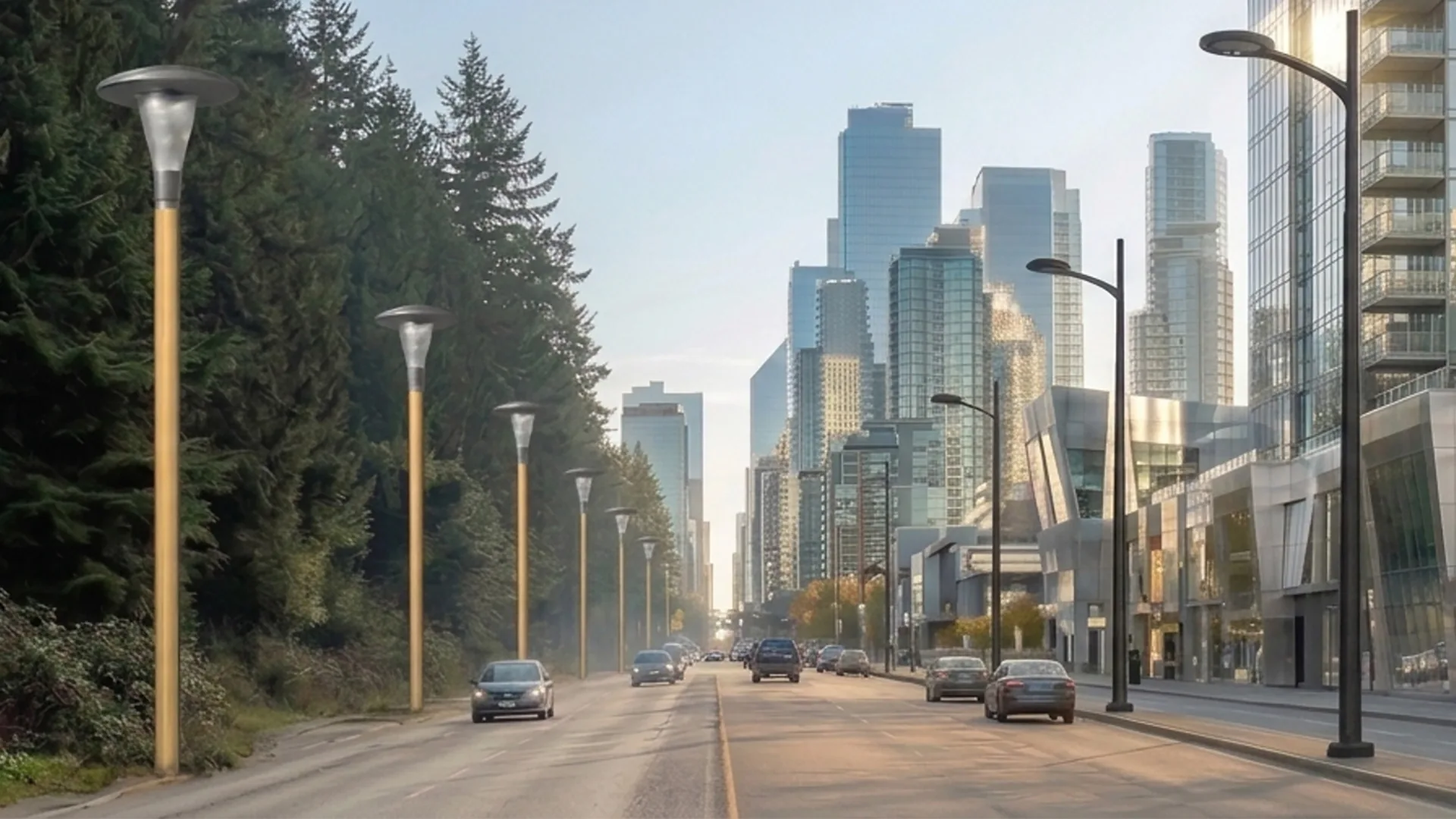
The amount of greenhouse gas emitted is calculated throughout a product’s life cycle and is converted to equivalent CO2 in order to obtain the carbon footprint. This varies depending on the product (diameter, height, materials, etc.). Hence, in certain cases, choosing a laminated timber alternative can reduce the carbon footprint of your project by up to 40%. To conduct the study completely objectively, Valmont collaborated with technical consultancy company REJLERS. Valmont can therefore provide the carbon footprint of each of its products.Learn more
Continuous Improvement Continuous Improvement
As part of its Continuous Improvement Policy and along with its innovations, Valmont is committed to a process of reducing the environmental impact of its products. Some points of progress: As part of its Continuous Improvement Policy and along with its innovations, Valmont is committed to a process of reducing the environmental impact of its products. Some points of progress:
- By using High-Strength Steel for optimised design.
- By using Aluminium incorporating 30% recycled matter.
- By using waste recycling or treatment in plants.
- By obtaining ISO 14001 Certification.
- By optimising delivery routes.
Ultimately, our aim is to obtain the lowest possible carbon footprint for your projects, no matter which materials you choose to use… Ultimately, our aim is to obtain the lowest possible carbon footprint for your projects, no matter which materials you choose to use.
